Active Life. Wellcome

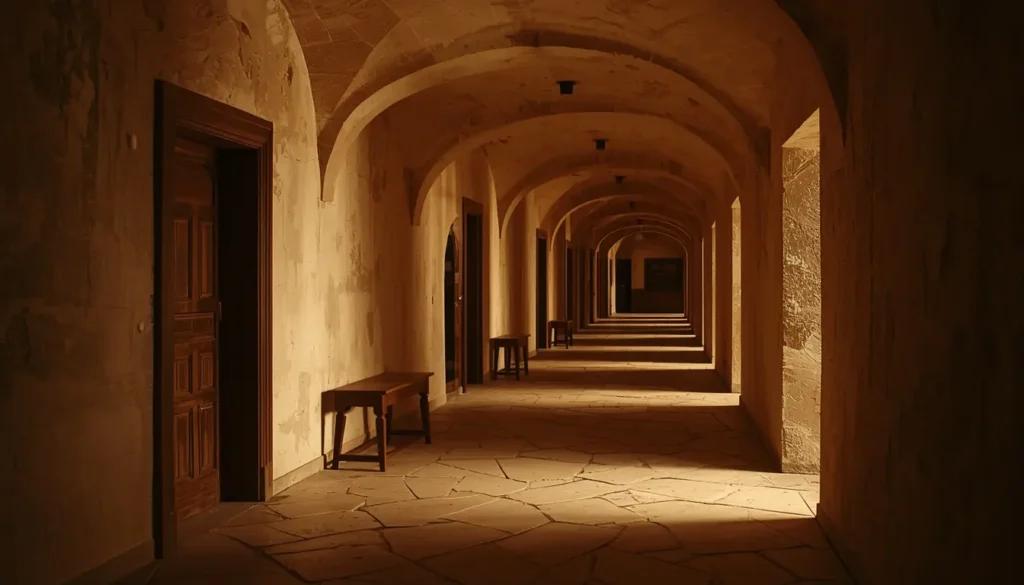
A house full of rooms where life is alive

Active Life After Sixty healthy lifestyle inspiration collage

Has anyone asked you today how your day truly was — and meant it enough to wait?

Not the polite version. Not the efficient summary. The real one, with unfinished edges and thoughts that did not settle when the day ended. Perhaps it was heavy in quiet ways, where even small things required more strength than they should. Tomorrow may already be standing nearby, asking questions you cannot yet answer. Or perhaps the day was simply long — full, crowded, leaving little space where you could feel yourself inside it.

If everything is sorted, you are welcome here. If nothing is sorted, you are welcome here.

Nothing is required before entering. No explanation, no improvement, no proof that you tried hard enough. You do not need to be clear, strong, productive, or composed. Being here is sufficient.

You do not need to negotiate your right to exist. There is no need to adjust your expression, manage your tone, or prepare the next response before the current moment has finished.

Read, or don’t. Pause if you need to. Skip, return, linger, or leave. Choose what fits without apology. This is not selfishness; it is the restoration of balance between a life and the person living it.

When that balance has been absent for too long, something inside begins to compress. Not dramatically — just enough that everything feels tighter, heavier, more effortful. Energy drains faster than it returns. Rest no longer restores what it once did. Decisions multiply while clarity recedes. You continue because continuing is what responsible people do, yet the sense of being carried by life fades and is replaced by the feeling of carrying it alone.

Nothing collapses, but nothing opens either.

From the outside everything may still appear intact. Inside, it can feel as if you are slightly removed from your own days — present enough to function, distant enough that moments pass without leaving depth behind. You remember what happened, but not what it felt like to be there.

No human being can remain in constant reaction without losing contact with direction. Urgency consumes the space where meaning would normally form. Attention fractures. Time flattens. Life becomes a sequence of responses rather than a coherent movement. This is not personal failure; it is adaptation to conditions that were never meant to be permanent.

At some point a quiet recognition appears, often without words: this cannot be all there is. Not as complaint, not as rebellion, but as the simple awareness that a room has no windows.

Most structures surrounding you are designed to maintain activity, not depth. They reward responsiveness over reflection, speed over coherence, visible results over internal stability. A person can function successfully within them for years and still feel strangely absent from their own life.

Yet something in you continues to search for space — not escape, not fantasy, simply air. A moment where nothing is pressing or pulling. That impulse is not weakness. It is the part of you that remembers what living is supposed to feel like when survival is not the only objective.

Better ways of living rarely arrive as dramatic changes. They appear as quiet rearrangements: effort that accumulates instead of evaporating, time that has shape instead of urgency, decisions that clarify instead of multiplying. When such conditions exist, even briefly, the body recognizes them before the mind does. Breathing deepens. Thoughts complete themselves. The constant background tension loosens just enough to reveal that it was there.

Anger softens, not because it was unjustified, but because it is no longer required as protection. Exhaustion lifts slightly, not because everything has improved, but because something has stopped draining you. Nothing spectacular occurs; circulation simply returns to places that had gone numb.

From there, clarity emerges as proportion. Problems remain, but they no longer occupy the entire field. Directions appear — not perfect solutions, simply paths that cost less of you than others. The difference between being pushed and being able to choose becomes visible again.

Control, in its deeper sense, is not domination. It is alignment — a life arranged so that it supports your continuity instead of consuming it. Not perfect, not effortless, simply sustainable. When such conditions exist, ordinary human capacities become sufficient again. You can think without strain, act without panic, rest without guilt, and connect without feeling depleted.

You are not late. You are not disqualified. You are not required to justify your existence before participating in it. Sensitivity to unsustainable pressure is not weakness; it is feedback.

There is a form of life that is calmer without being passive, organized without being rigid, intelligent without being exhausting, and quietly joyful without demanding performance. It does not judge you for having limits and does not require you to become someone else in order to belong.

It is not somewhere else. It is a different arrangement of what already exists.

You do not need to solve everything now. You do not need to decide what comes next. You do not need to explain what brought you here. You only need to remain long enough for the pressure to drop below the level where everything feels urgent. When urgency recedes, perception widens. When perception widens, direction becomes visible.

Life can be inhabited, not merely endured; directed, not simply managed; experienced from within, not performed from the outside. You do not have to rebuild yourself from nothing or abandon who you are. Nothing here asks you to become someone else. It only invites you to rediscover the part of you that already knows how to live when given room to do so.

Stay as long as you need. Leave when you wish. Return without explanation. Continuity will still be here.

And perhaps, without pressure or expectation, you may begin to sense something subtle but unmistakable: the feeling that life is not something happening to you, but something you can stand inside again — breathing, aware, unfinished, and able to continue.

A meaningful life is not built by chasing what looks good, but by removing what makes living slowly impossible. You do not discover yourself by adding more; you discover yourself by setting down what was never yours to carry.

Most burdens were not chosen. They were accepted quietly, gradually, because resisting them once cost more than enduring them. Stability was needed more than truth. Saying no would have broken something you could not afford to lose. Endurance became habit, habit became identity, and what was temporary began to feel permanent.

Clarity does not arrive when you finally know what you want. It arrives when you can no longer pretend that certain things are livable. Not dramatic things — ordinary ones that erode you by millimeters: days without air, expectations without reciprocity, roles that require your presence but not your reality.

A life can appear functional while becoming uninhabitable from within.

The turning point is quiet. It happens when tolerance stops feeling noble and begins to feel dangerous — when the energy required to maintain what is “normal” exceeds the energy available to remain fully alive inside it. At that point refusal is not rebellion; it is self-preservation.

You do not have to destroy everything. You do not have to explain yourself. You do not even have to know what comes next. You only have to stop calling necessary what is slowly erasing you.

Much of what burdens a life dissolves not through heroic effort but through the simple decision to stop holding it in place. Nothing dramatic may happen at first — only a slight increase in air, a quiet return of weight to your own body, thoughts that no longer feel borrowed.

From there direction does not need to be invented. It reappears, the way a path reappears when you stop walking in circles.

You were never meant to carry everything. You were meant to carry what is yours and live in the space that remains. And that space — unclaimed, unforced, quietly yours — is where a real life begins again.

Nothing new was given to you.
Something unnecessary was removed.

Where you can begin

The House That Holds

Life works if rest works

Kitchen — Center Of Ordinary Genius

Where Things Earn Their Place

Begin anywhere. The rooms are connected.

Impact-Site-Verification: a6429ddb-8aa2-4da3-b6ca-14789792afbc