
KITCHEN — CENTER OF ORDINARY GENIUS
A Steadier Way to Work in the Kitchen
This page examines physical stability in kitchen work. Not habits. Not technique. It looks at when unwanted movement appears, what allows it to happen, and where steadiness is physically created.
Some links on this page may be affiliate links. If you choose through them, it helps support this project — without changing what you pay.
WHERE STABILITY IS USUALLY LOST
Instability rarely comes from large failures.
Steady kitchen work emerges when surfaces, tools, and reach support the body naturally. Instability appears during pressure: a cutting board that shifts when force is applied, a bowl that needs to be held down to stay in place, a mat or surface that moves as weight changes.
These moments don’t stop the task. They require constant correction when stability is not supported. Steady kitchen work is the result of physical conditions — not effort, posture rules, or technique.
What Actually Creates Stability
Stability is created by physical conditions, not effort: friction between surfaces, weight that resists tipping, and contact areas that distribute pressure. When traction is sufficient, items stay in place. When weight is balanced, tools resist twisting. When contact is wide enough, pressure doesn’t cause movement. These factors work independently of technique.
Stability is built at contact points.
Where hands meet tools. Where tools meet surfaces. Where pressure is applied repeatedly. This is where small changes matter most — not in how you work, but in how objects respond. When contact is secure, movement stops negotiating.
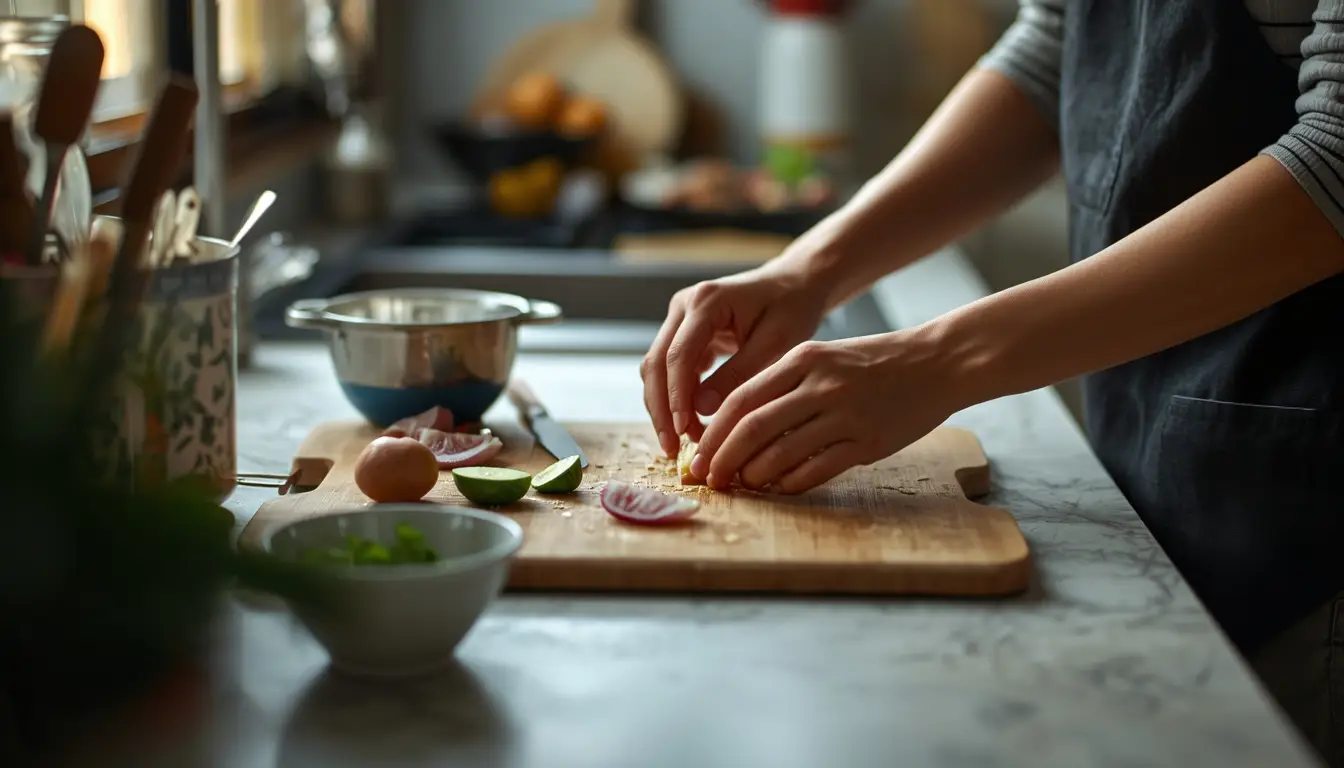
Non-Slip Cutting Boards
A stable surface doesn’t shift while working. The value is simple: the task can continue without one hand being spent on control.
Lightweight Cookware
Less wrist strain during everyday cooking. Adaptive kitchen tools can reduce grip and pressure without changing the task.
KitchenShop Europe
Browse the full KitchenShop range for everyday cooking and preparation.
Cookware
Pots, pans and cookware designed for lighter handling, easier control, and simpler everyday cooking.
Kitchen Appliances
Small kitchen appliances that can reduce repetitive effort in everyday preparation.
Kitchenware
Practical utensils and everyday tools for preparation, serving and routine kitchen work.
Knives
Kitchen knives and cutting tools for controlled, straightforward preparation.
More from KitchenShop
Explore additional KitchenShop categories and current options beyond the main groups.