

GROUND CONTACT
Landing Without Impact — Not Braced
The first step should not require a private negotiation with the floor. Footwear, grip and a predictable landing make standing and walking feel more ordinary from the moment the body meets the ground.
Affiliate disclosure: we may earn a commission from some product links on this page, at no extra cost to you.
GROUND CONTACT WITHOUT DRAMA
The useful landing is the one the body stops thinking about.
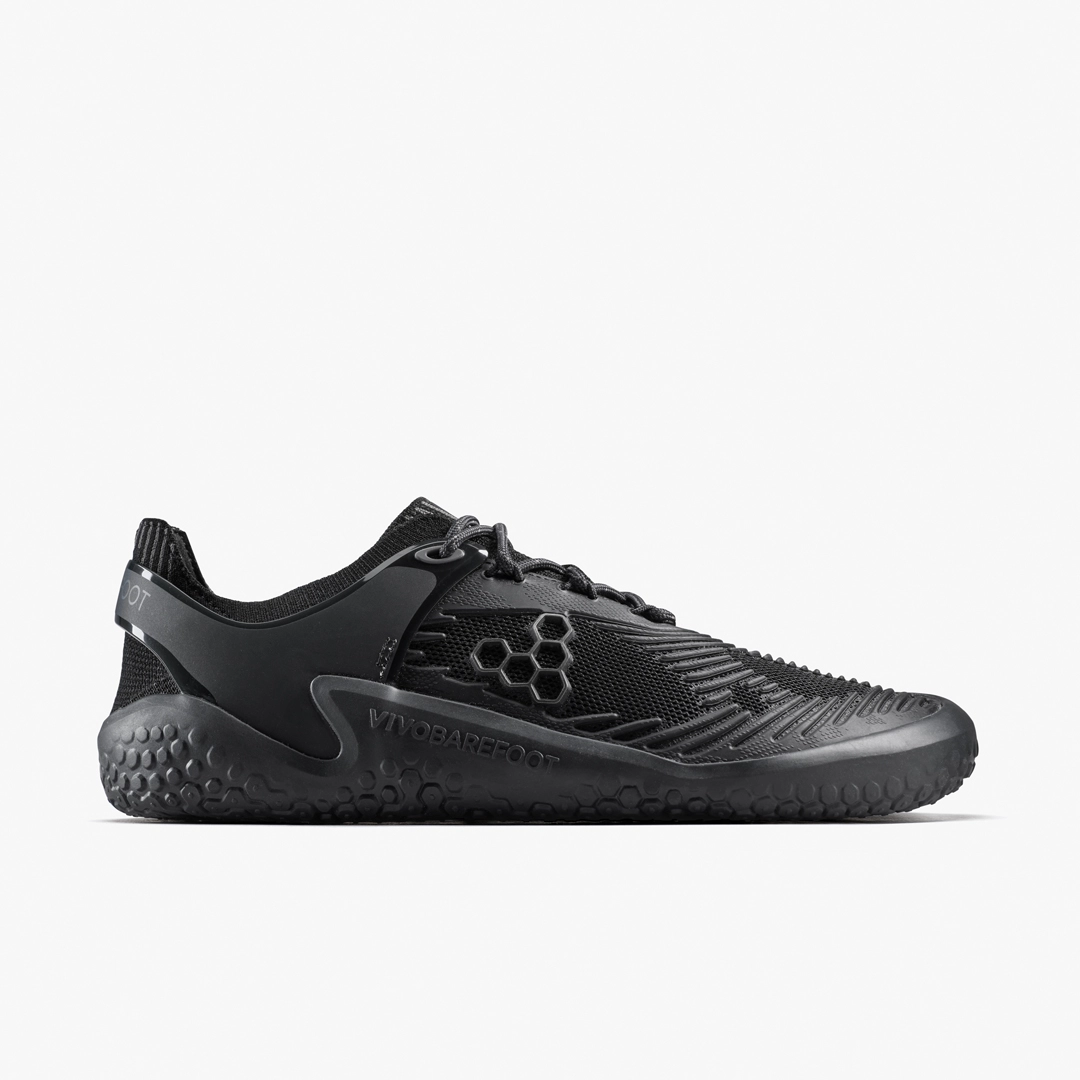
Vivobarefoot — natural ground contact
A thinner, flexible sole can make the ground easier to read without adding unnecessary bulk between the foot and the surface.
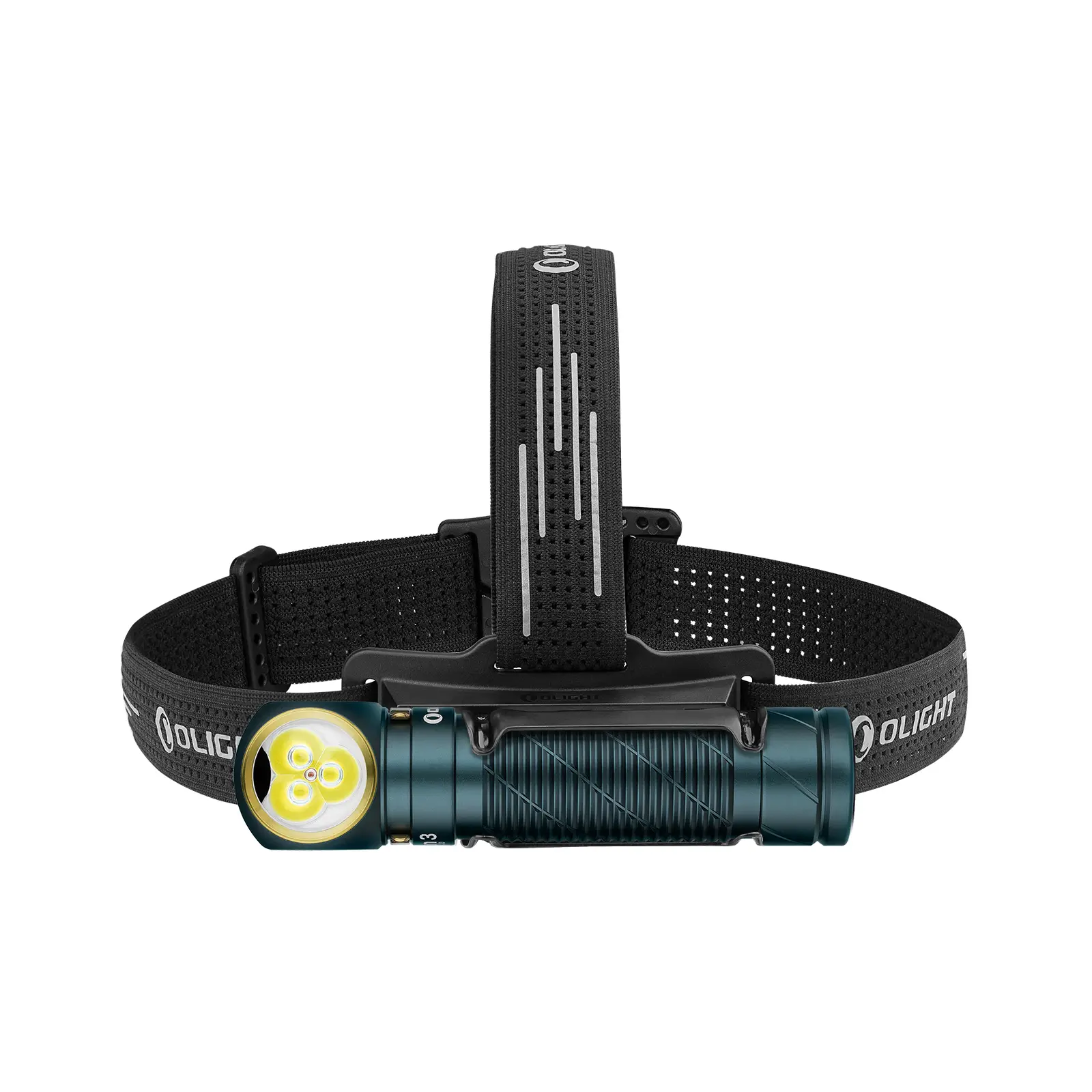
Low-light visibility
A clear view of the landing helps the body move with less hesitation when early mornings, stairs or the walk outside begin in low light.
COMFORT STARTS BELOW THE ANKLE
Small layers can change how the whole step feels.
Socks, seams, pressure points and the way the shoe meets the skin matter because irritation changes gait long before it becomes the thing you consciously notice.
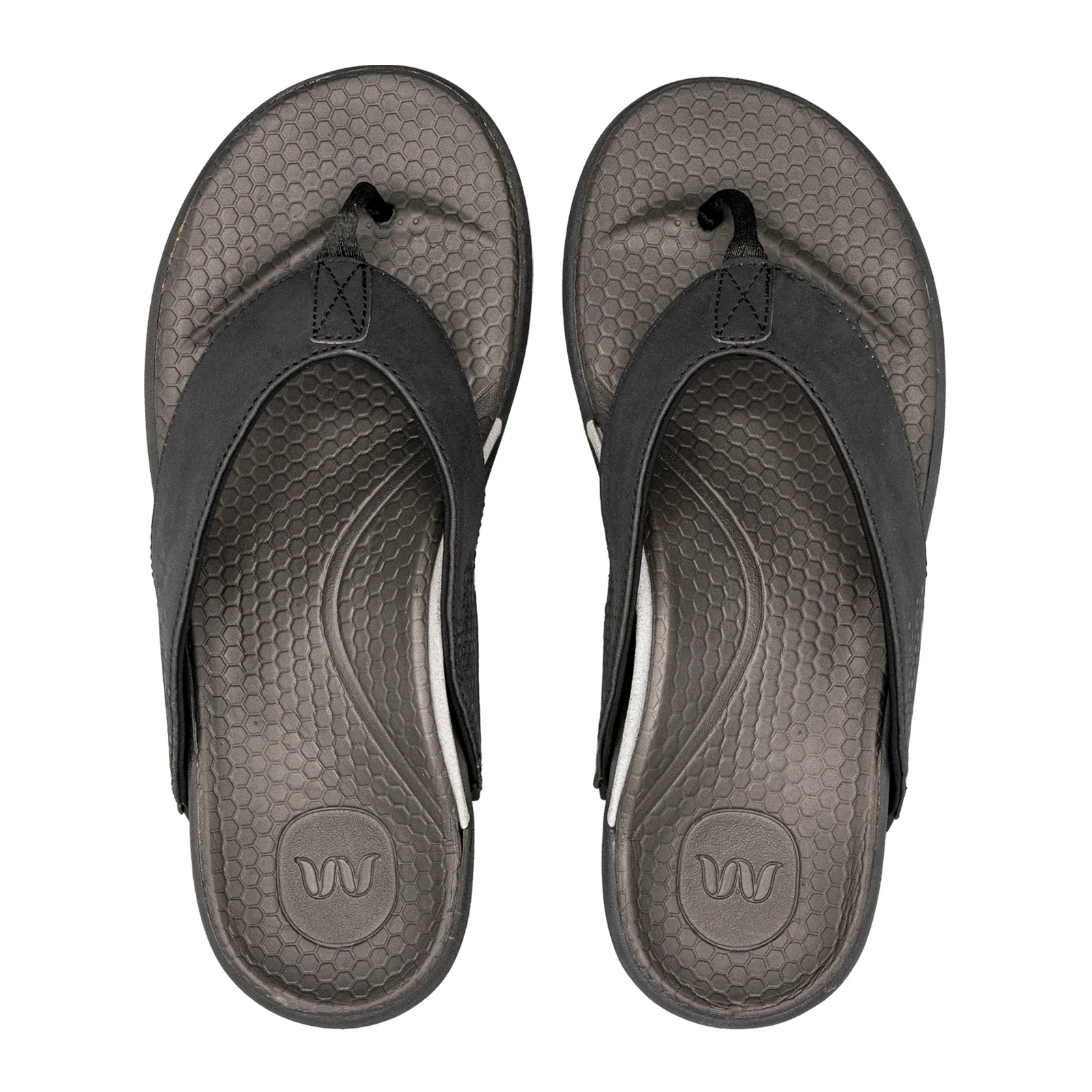
FitMyFoot — support that meets the foot
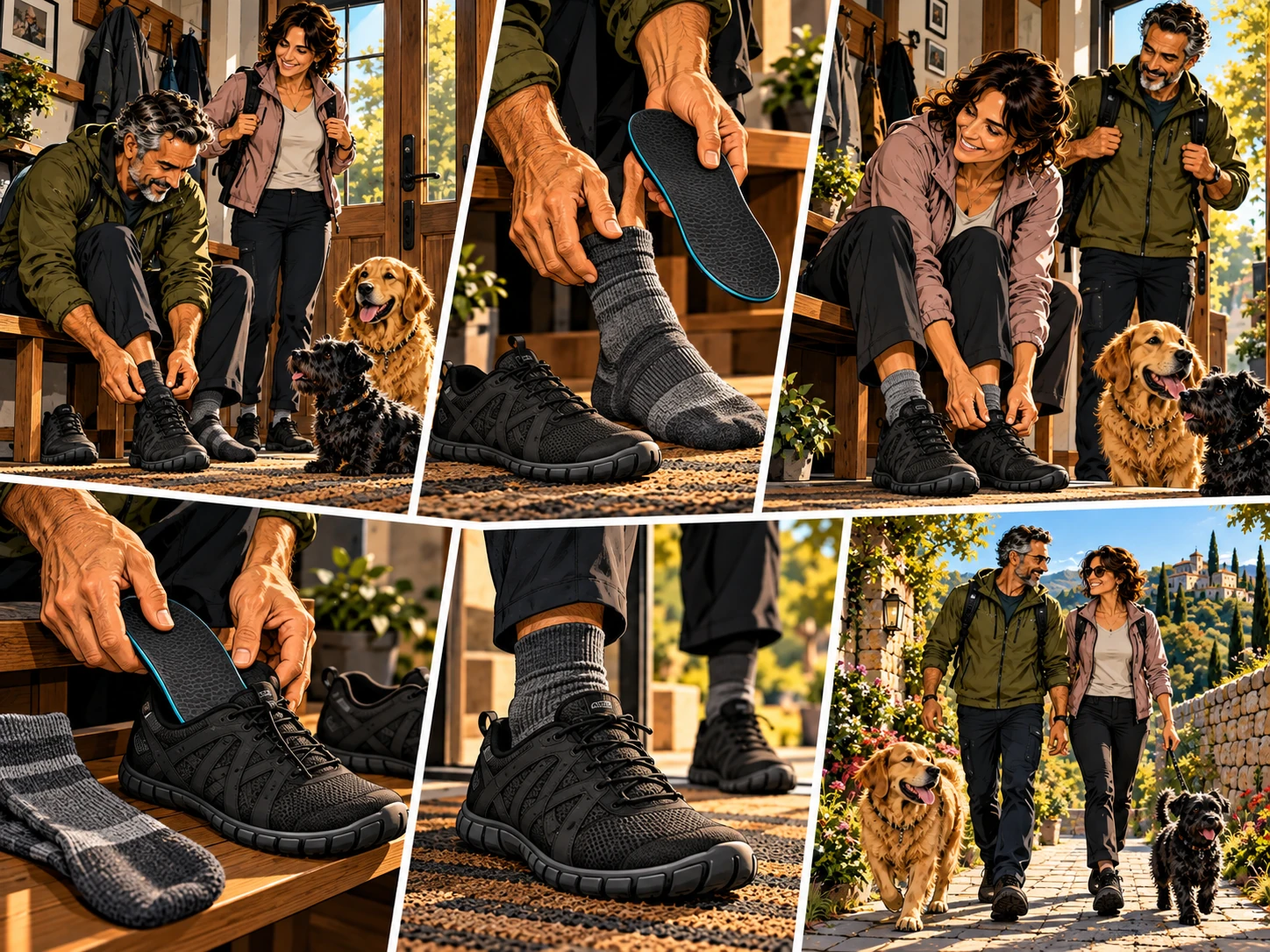
When the foot needs more shaped support, a better fit can make standing and the first minutes of walking feel less negotiated.
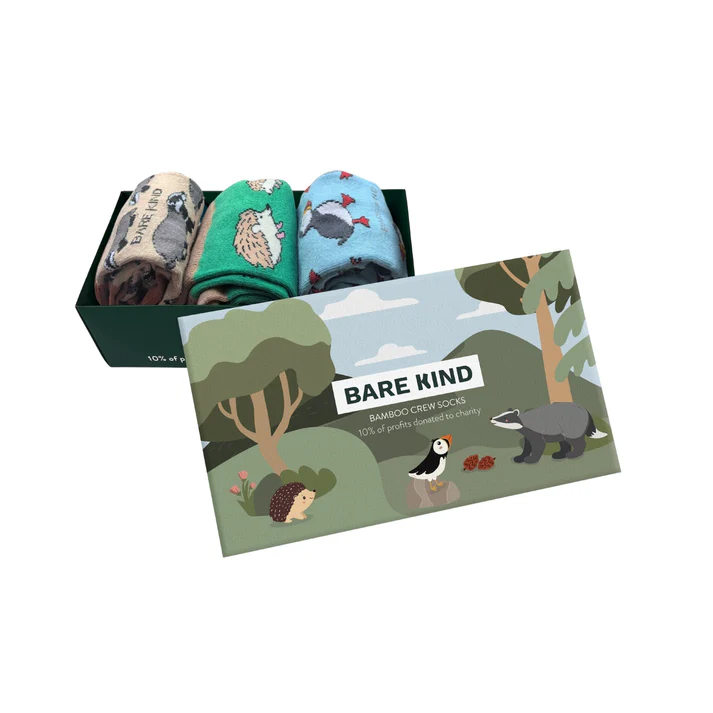
Keep the layer against the skin comfortable.
A soft, well-fitting sock can remove rubbing and pressure without needing to become a technical system.
THE HALF-SECOND BEFORE THE STEP
Most hesitation is too small to call hesitation.
It is the pause while one foot checks the floor. The small shift of weight before the threshold. The hand that reaches for something a second earlier than it needs to.
The best landing does not make you feel brave. It makes the pause unnecessary.
ONE OF US WAS ALREADY OUTSIDE
Some days begin because someone else is already moving.
The dog is at the door. One of us has the leash. The other is still deciding whether the first step feels easy enough today. Nobody gives a speech. Nobody turns it into a test.
Sometimes companionship removes more friction than motivation ever could.
THE GROUND CHANGES BEFORE YOU NOTICE
The body reads every surface before the mind names it.
Wood. Tile. Threshold. Step. Gravel. Wet grass. Darkness. A good day outside is not one perfect surface. It is a chain of small transitions that never become important enough to stop the next step.
COMING HOME SHOULD BE EASIER THAN LEAVING
The last step matters because the day is already inside the body.
The dog gets home first. Shoes come off where they always do. The light is enough. Nobody has to reorganize the house just to be finished with the walk.
A good threshold does not announce freedom. It simply stops charging admission.
AT THE DOOR
Preparation stopped being the first obstacle.
Shoes on. Hand on the rail. Weight forward. The body did not brace for the threshold because the threshold no longer deserved that much attention. Outside was simply the next place.
Freedom often begins where preparation becomes unnecessary.