
KITCHEN — CENTER OF ORDINARY GENIUS
Adaptive Kitchen Tools
A good kitchen doesn’t demand strength or speed. It adapts. Handles are easier to hold. Surfaces stay where they should. Movement becomes smoother and more predictable. Adaptive tools don’t change how you cook. They reduce unnecessary effort so the kitchen works with you.
Some links on this page may be affiliate links. If you choose through them, it helps support this project — without changing what you pay.
WHAT MAKES A TOOL ADAPTIVE
Less force. Better contact. Less compensation.
Good adaptive tools remove resistance quietly. They don’t demand new habits. They let familiar movements feel natural again.
Common Types of Adaptive Kitchen Tools
Grip support. Stability support. Force and leverage support. Reach and access support. Each addresses a different point of friction without changing how the kitchen looks or how familiar movements are performed.
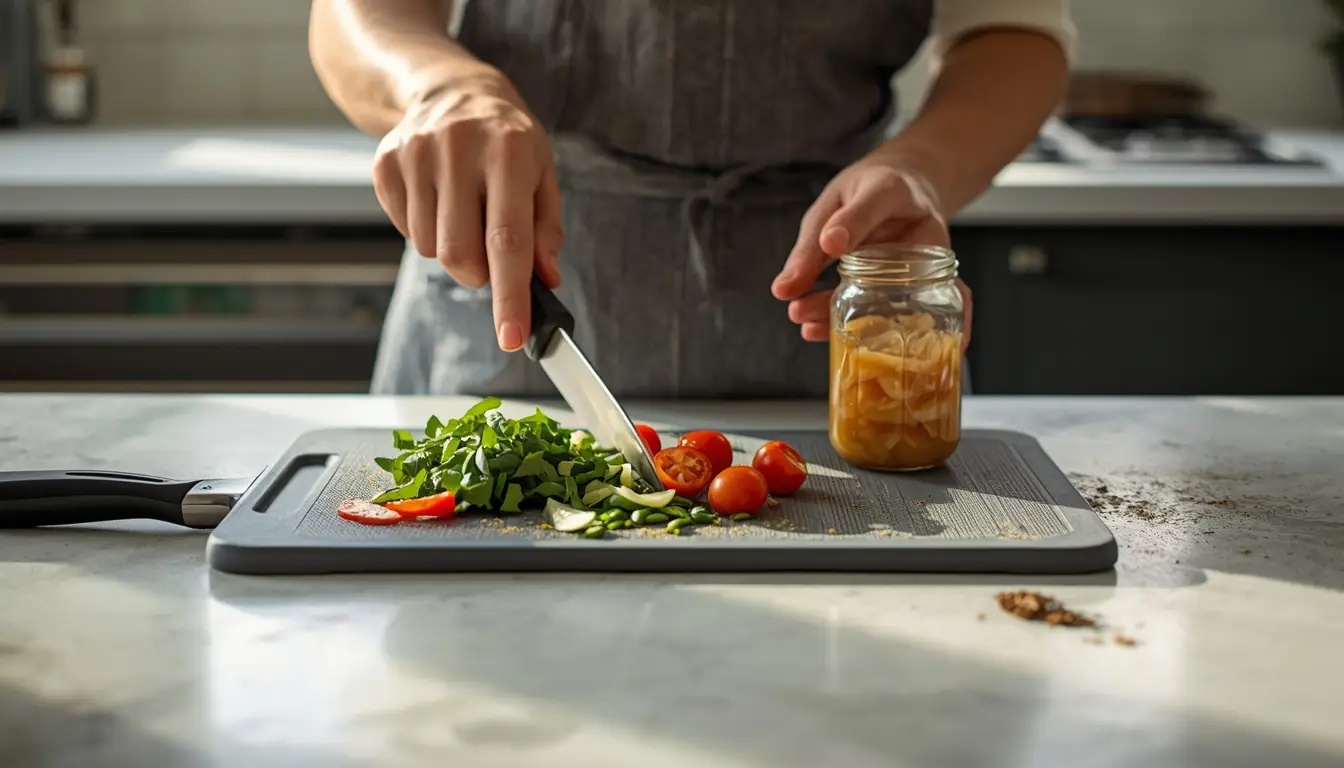
Examples include non-slip cutting boards and adaptive grip kitchen tools.
How to Choose What Actually Helps
The most helpful tools solve one small point of friction — something that repeats, something easy to miss, something that quietly adds effort. Tools that do less often do more. They support a single movement without changing the rest of the task. One or two quiet adjustments, placed in the right moments, are usually enough.
KITCHEN — CENTER OF ORDINARY GENIUS
Quick Meals That Cost Less and Ask Less
Five genuinely inexpensive meals for days when dinner needs to be good, fast and uncomplicated. Every recipe stays under 30 minutes, keeps the ingredient list short and uses one practical shortcut to remove work without removing flavour.
✦ 20–25 MIN • ONE PAN • VERY LOW COST
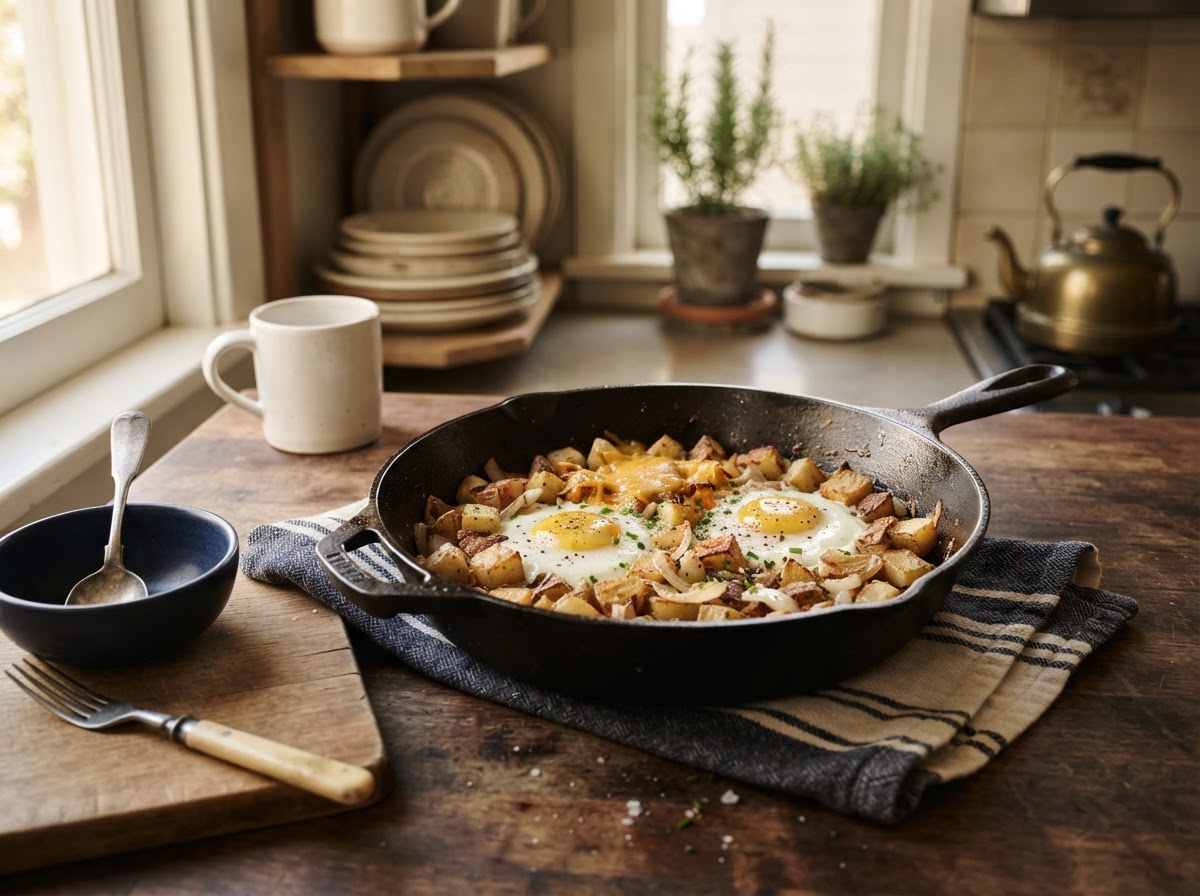
Crispy Potato & Egg Skillet
You need: 2 medium potatoes, 1 small onion, 2 eggs, a small handful of grated cheese, oil, salt and pepper.
Do this: Dice the potatoes small. Fry them with onion in a covered pan for 12–15 minutes, stirring only a few times. Make two spaces, crack in the eggs, cover again and cook until set. Finish with cheese.
Genius shortcut: Microwave the diced potatoes for 4 minutes first. They crisp quickly in the pan instead of spending 20 minutes there.
Why it earns its place: Cheap staples become a proper hot meal with one pan and almost no cleanup.
✦ 15–20 MIN • ONE POT • PANTRY-FRIENDLY
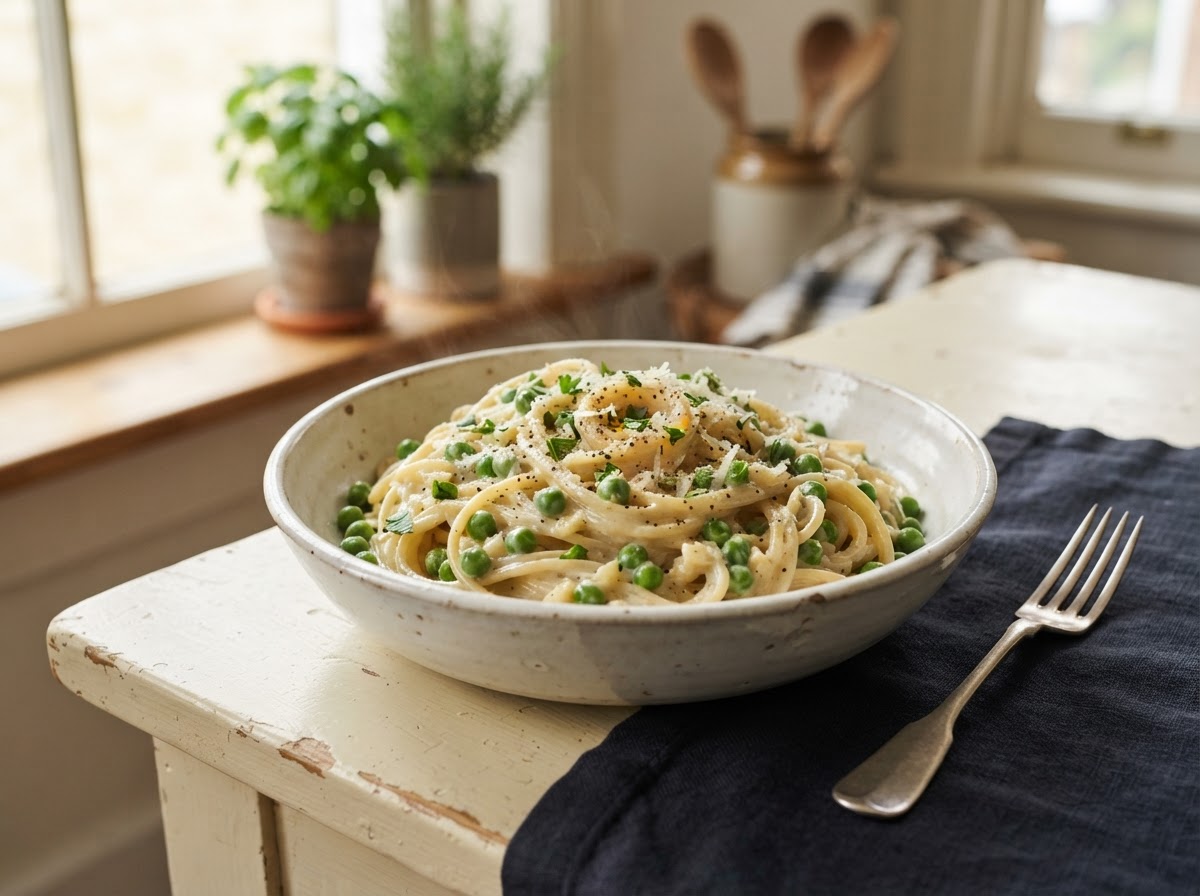
Creamy Garlic Pasta With Peas
You need: pasta, frozen peas, 1–2 garlic cloves, 2 spoonfuls of cream cheese or a splash of cooking cream, grated cheese if available, salt and pepper.
Do this: Boil the pasta. Add frozen peas for the final 2 minutes. Save half a mug of pasta water, drain, then stir everything back into the warm pot with garlic and cream cheese. Loosen with pasta water until glossy.
Genius shortcut: The peas cook in the pasta water. No second pot, no chopping vegetables, no separate sauce pan.
Why it earns its place: It tastes richer than its ingredient list suggests.
✦ 20 MIN • ONE PAN • LEFTOVER-SMART
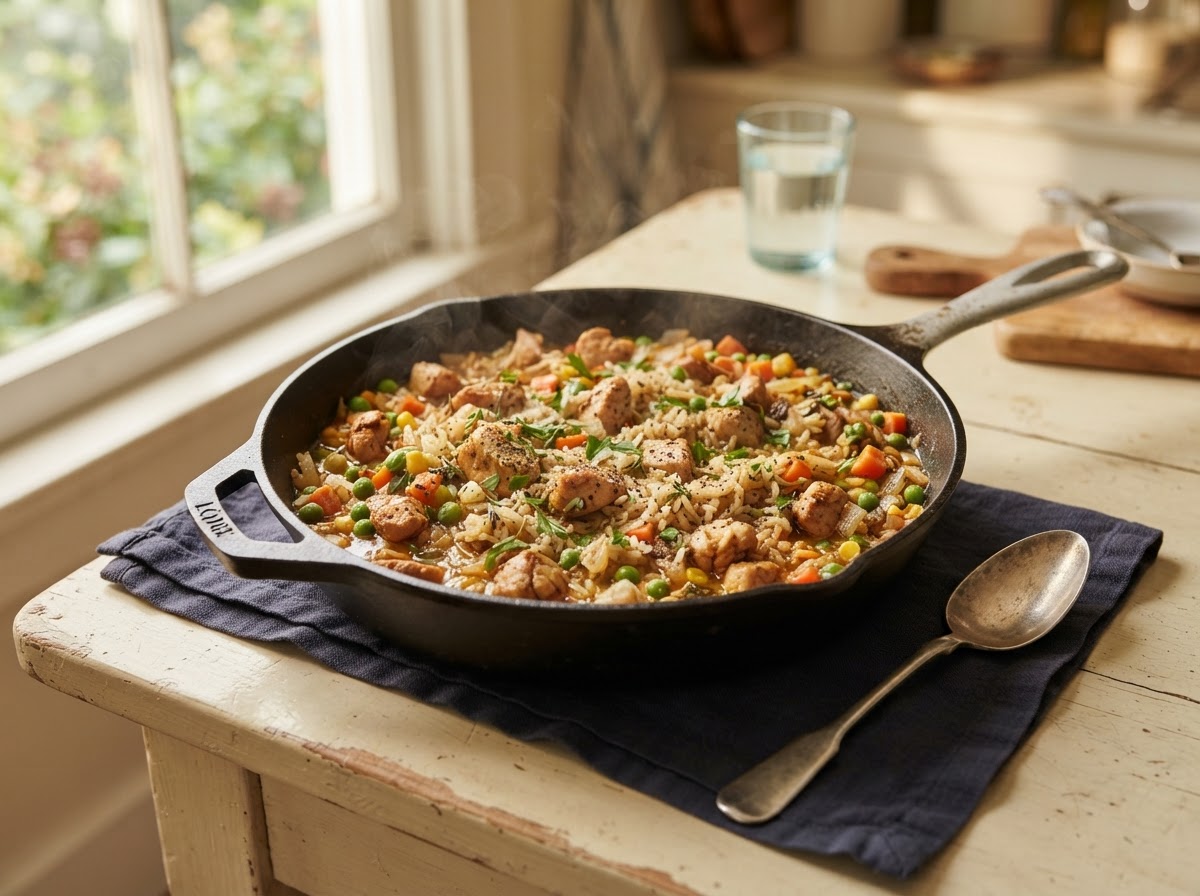
Chicken & Rice Shortcut Pan
You need: 250 g chicken pieces, 2 cups cooked rice, 2 cups frozen mixed vegetables, soy sauce or your favourite seasoning, oil.
Do this: Cook the chicken pieces thoroughly in a wide pan. Add frozen vegetables and cook 4–5 minutes. Add cold cooked rice and seasoning, then stir until everything is hot and lightly toasted.
Genius shortcut: Whenever rice is cooked, make double. Promptly refrigerated rice from yesterday turns dinner into a 20-minute job and fries better than fresh rice.
Why it earns its place: One leftover becomes the base of the next meal instead of waste.
✦ 15 MIN • PANTRY MEAL • VERY LOW COST
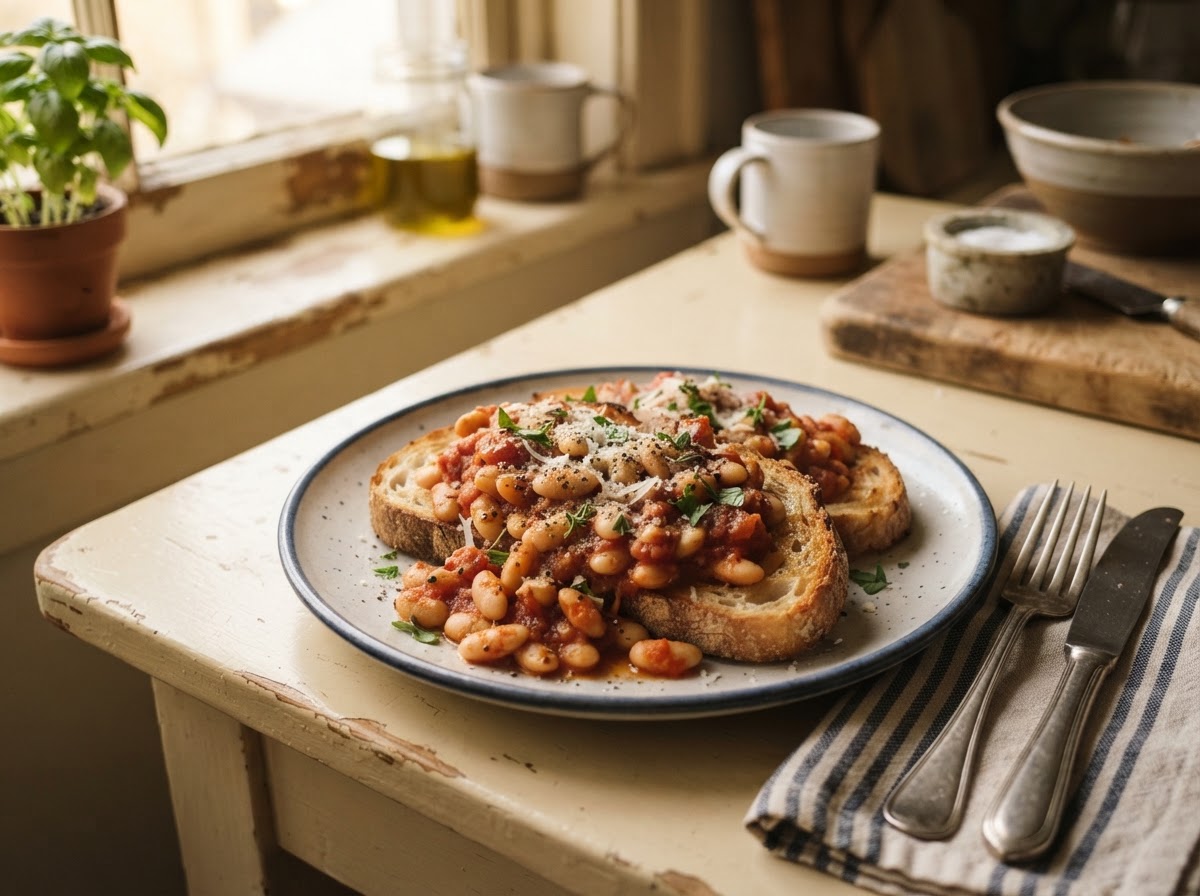
Tomato Beans on Toast
You need: 1 can of white beans, 1 can chopped tomatoes or passata, garlic, dried herbs, bread, optional grated cheese.
Do this: Warm the beans and tomatoes together with garlic and herbs for about 10 minutes. Toast thick slices of bread and spoon the beans over them. Add cheese if you have it.
Genius shortcut: Keep one can of beans and one can of tomatoes together in the cupboard. That pair is an emergency dinner, not just pantry storage.
Why it earns its place: It is filling, cheap and tastes like more work went into it than actually did.
✦ 10 MIN • BREAKFAST OR DESSERT • VERY LOW COST
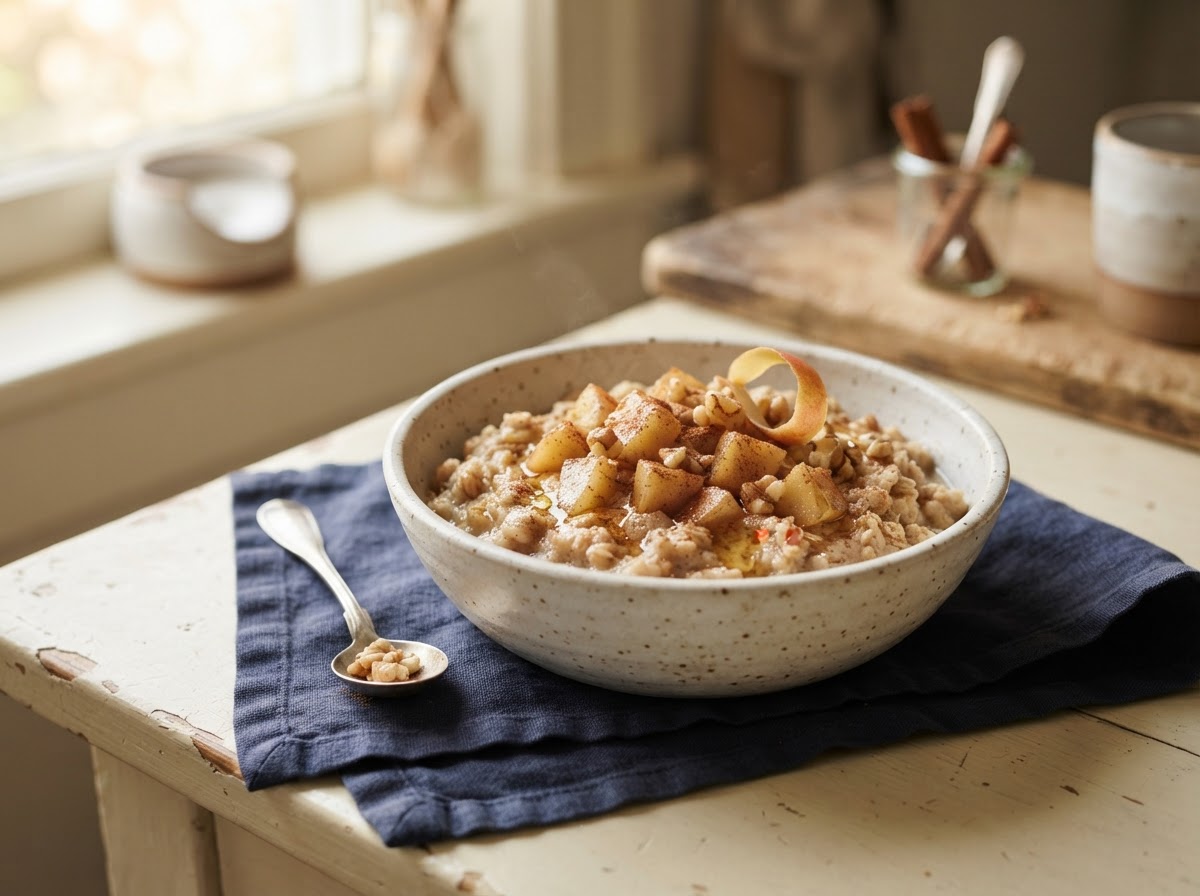
Fast Apple Cinnamon Oats
You need: oats, 1 apple, milk or water, cinnamon, a little honey or sugar, pinch of salt.
Do this: Dice the apple small and cook it with oats, liquid, cinnamon and salt for 5–7 minutes. Sweeten only at the end.
Genius shortcut: Grate half the apple instead of chopping all of it. It disappears into the oats, sweetens the whole bowl and cooks almost immediately.
Why it earns its place: Breakfast ingredients become a warm dessert without buying anything special.
TOOLS THAT EARN THEIR PLACE
Make the repeated step easier.
A predictable pan, a knife that suits your hand, or a small appliance used often can help these meals fit the day. Check weight, handle, cleanup and storage against your own kitchen before choosing.
PAN · US STORE
Alva Cookware
A frying pan is the workhorse for the potato and egg skillet and the shortcut rice pan. Choose the size and weight you will actually reach for.
KNIFE · US STORE
Swiss Diamond
For potatoes, apples and everyday vegetables, compare a small utility or paring knife by its handle and blade shape. Choose only what feels right for your prep.
KNIVES + APPLIANCES · EU STORE
KitchenShop Europe
Miyabi knives from Japan, Zwilling knives from Germany, plus food prep appliances. Compare handle, weight and cleanup with the work you do most.
A kitchen that works well doesn’t announce itself.
It simply feels easier to move in. Less effort goes into small tasks, and more energy stays with you. Adaptive kitchen tools are most useful when they remove effort without adding complexity. When a tool stays in place, feels predictable, and supports a single movement, the work becomes quieter. Nothing new needs to be learned — the kitchen simply responds better.
When the kitchen works for you, confidence returns quietly.