
The Calm Side of the Kitchen
This page looks at how calm shows up in everyday kitchen use.
Not as a design choice, but as something felt during ordinary tasks.
Calm isn’t added.
It’s either supported — or quietly worn down — by what happens while using the space.
Small physical disruptions — sliding, shifting, needing constant adjustment — are usually what break calm.The calm side of the kitchen is felt most clearly during ordinary use
This page focuses on where that happens, what restores balance, and how calm is quietly supported in daily work.
When the Kitchen “Attacks” (Quietly)
The kitchen rarely disrupts calm all at once. It does so in small, repeated moments.
A cutting board that shifts slightly. A bowl that needs one hand just to keep it still. An object that moves when pressure is applied.
Nothing dramatic happens, but attention shifts from the task to controlling the space.
These small disruptions accumulate, turning simple work into ongoing correction.
This is how calm is lost — not through danger, but through repeated friction.
What Creates the Calm Side of the Kitchen
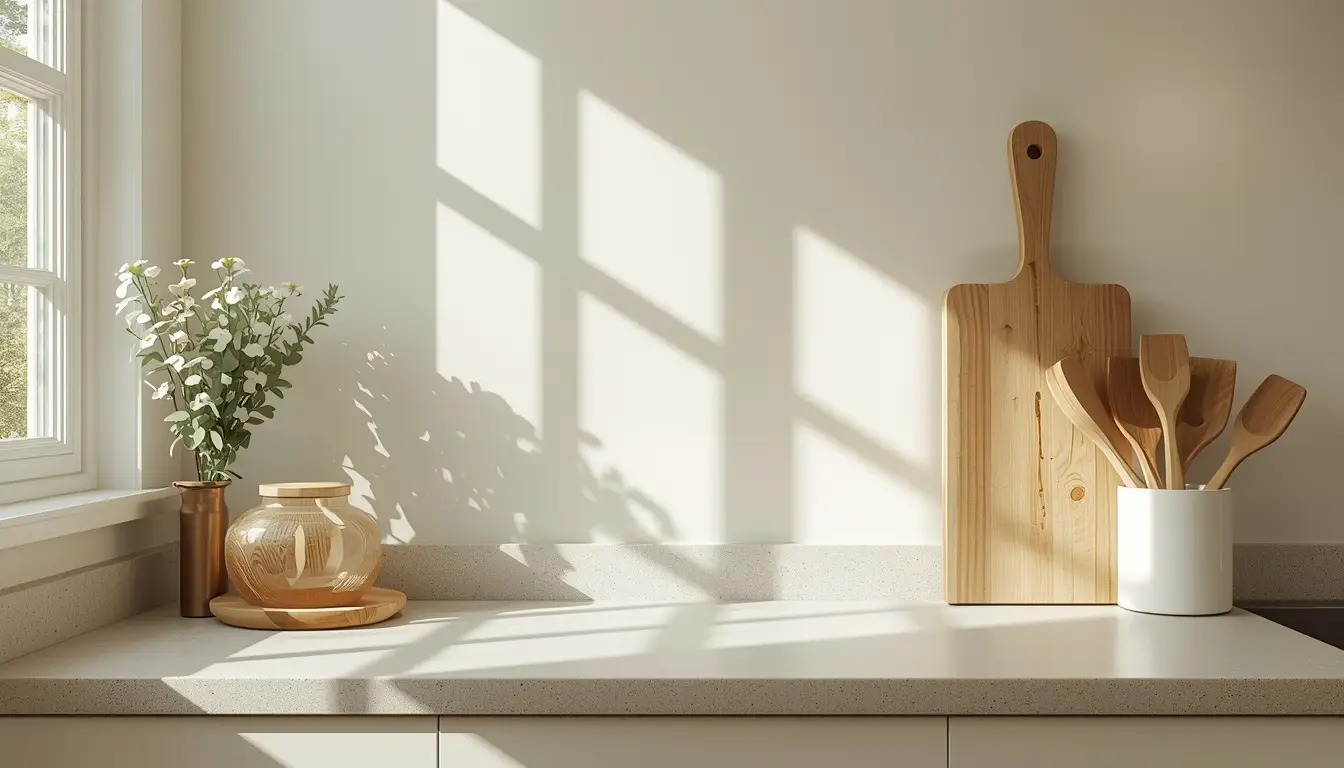
Calm comes from a few practical qualities that repeat themselves throughout the space.
Surfaces that stay put Tools that don’t twist or slip Handles that feel secure without effor
When grip improves, movements become more confident. When items stay stable, attention stays relaxed.
Weight, texture, and contact matter more than design. The best changes are often the least visible — they’re felt while moving, not noticed while looking.
A calm kitchen is built from these small, consistent supports working together.
Where Calm Is Built
Calm is usually built into the parts of the kitchen that are touched most often.
Cutting boards that don’t slide Utensils that feel steady in the hand Jars and containers that open without struggle
These are small interactions, but they repeat many times a day. When they work smoothly, the entire kitchen feels easier to move through.
Good tools don’t announce themselves as “adaptive.” They simply remove resistance — so tasks feel lighter and more predictable.
Choosing a few well-designed items in the right places often matters more than changing the whole setup.
A calm kitchen doesn’t require attention. It supports movement without asking for care or vigilance.
When tools feel steady and surfaces behave as expected, confidence returns naturally. Not because anything changed about you — but because the space stopped working against you.
That quiet reliability is what makes a kitchen feel steady day after day.
Nothing announces it.
Nothing asks for attention.
But once it’s present, it’s noticed when it’s missing.
The Quiet Help of Small Machines
When the Kitchen Stops Asking You to Stretch
Tools That Keep the Day in Your Hands
Living Without Resistance Where Effort Finally Softens
Where the Body Lets Go — Settling the Day
Wikipedia –kitchen ergonomics